Plano, TX · 24/7 water heater flood cleanup
Water Damage Restoration Plano provides 24/7 water heater flood cleanup across Plano. When a tank fails in your garage, closet or attic, we extract the water, dry the walls and ceilings it reached and stop mold before it starts.
📞 Call Now: 972-433-6160Free inspection · Answered 24/7
Water heater flood Plano
A standard tank holds 40 to 50 gallons, but that's only the start. When the tank ruptures or a supply fitting fails, the cold-water line keeps refilling it until someone closes the valve. A water heater leak that starts overnight or while you're at work can put hundreds of gallons into your home.
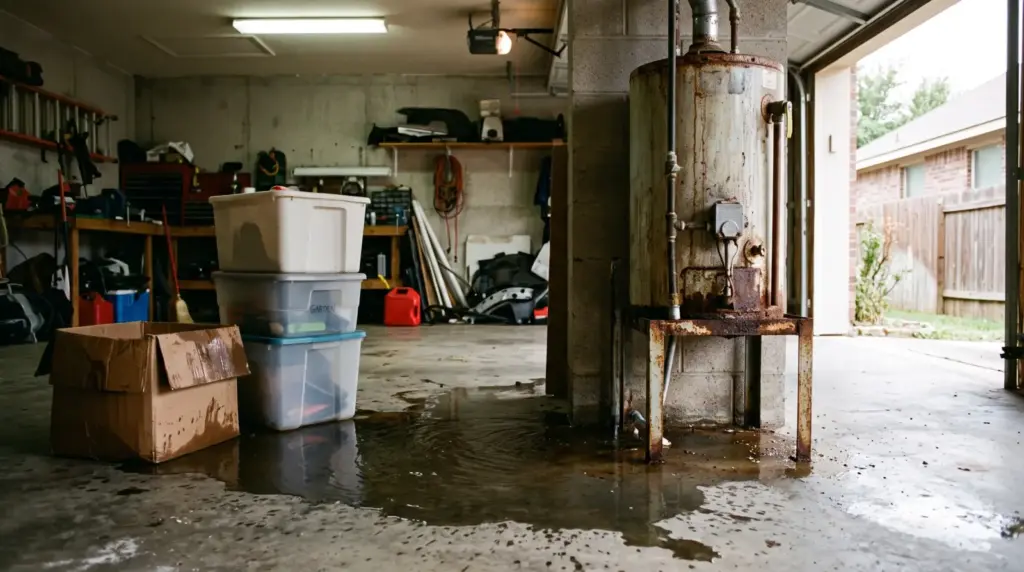
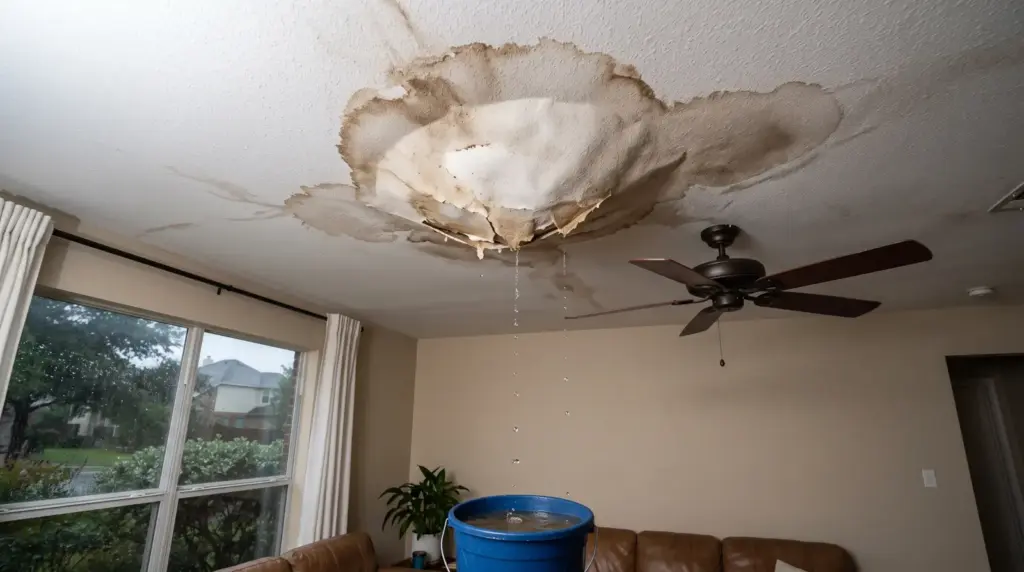
Where the water goes depends on where the heater is. In a garage, it spreads across the slab and under the shared wall into the house. In an interior closet, it soaks carpet, baseboards and the next rooms over. In an attic, which is common in North Texas homes, it pours through insulation and drywall into the rooms below.
Our water heater leak cleanup in Plano covers the whole path: extracting standing water, opening and drying wall cavities and ceilings, removing wet insulation and saturated materials, and drying the structure with commercial equipment until moisture readings confirm it's done. Water that sat in sediment at the bottom of a tank can be gray water, so we clean and treat affected surfaces as well.
If the heater burst and water reached the ceiling below, see our ceiling water damage page. For the drying process itself, see structural drying.
Warning signs
Most tank failures give warning first. Catching these early can prevent a flood.
Tank water heaters typically last 8 to 12 years. Hard North Texas water can shorten that.
Rust stains or flakes around the bottom mean the tank is corroding from the inside.
Any water in the pan under the tank means a slow leak has already started.
A temperature and pressure relief valve that drips often signals excess pressure or a failing valve.
Sediment buildup at the bottom of the tank causes noise and stresses the tank.
Discolored hot water can mean the tank lining is breaking down.
Our process
Insurance
Sudden water heater failures are generally covered by Texas homeowners policies for the water damage they cause. The water heater itself usually isn't, since it's considered wear and tear, and slow leaks that went unnoticed may be denied.
Take photos of the tank, the label and the damage before anything is removed. We add moisture readings and drying logs so your adjuster sees the full extent of the loss.
Plano homes
Many Plano homes built from the 1980s through the 2000s put water heaters in the attic or garage to save interior space. Attic units are the most damaging when they fail, because water comes straight down through insulation and drywall into bedrooms, hallways and living areas.
Attic water heaters should sit in a drain pan connected to a drain line. Over time, pans rust, lines clog and pans overflow. If your attic heater is more than 10 years old, have a plumber check the pan, drain and relief valve, and consider a leak sensor with an automatic shut-off.
Garage water heaters are less likely to damage finished rooms, but water often runs under the wall into a laundry room, kitchen or hallway. We check both sides of the wall and the slab beneath before calling the job dry.
Questions
How do I shut off a leaking water heater?
Close the cold-water valve on the pipe going into the top of the tank. Then turn off the breaker for an electric heater, or set the gas control to Pilot or Off. If you can't reach the valve, close your home's main shut-off.
Do you replace the water heater?
We handle the water damage cleanup and restoration. A licensed plumber replaces the heater, and we can coordinate timing so drying starts right away.
Can the drywall be saved?
Sometimes. Drywall wet with clean water can often be dried in place. If it's saturated, swollen or the water sat in sediment, the lower section is usually replaced.
My attic water heater leaked through the ceiling. Is it dangerous?
A wet, sagging ceiling can collapse. Keep people out from under it, turn off lights and fans in that ceiling, and call for help.
How long does cleanup take?
Extraction happens on the first visit. Drying typically takes three to five days, longer if water reached ceilings or under cabinets.
Do you handle water heater floods in all of Plano?
Yes. We respond 24/7 across every Plano ZIP code and nearby Allen, Richardson and Murphy.
Related services
Water heater floods usually need water extraction and structural drying. Other common causes include burst pipes and frozen pipes. See everything we do on our main Plano water damage restoration page.